
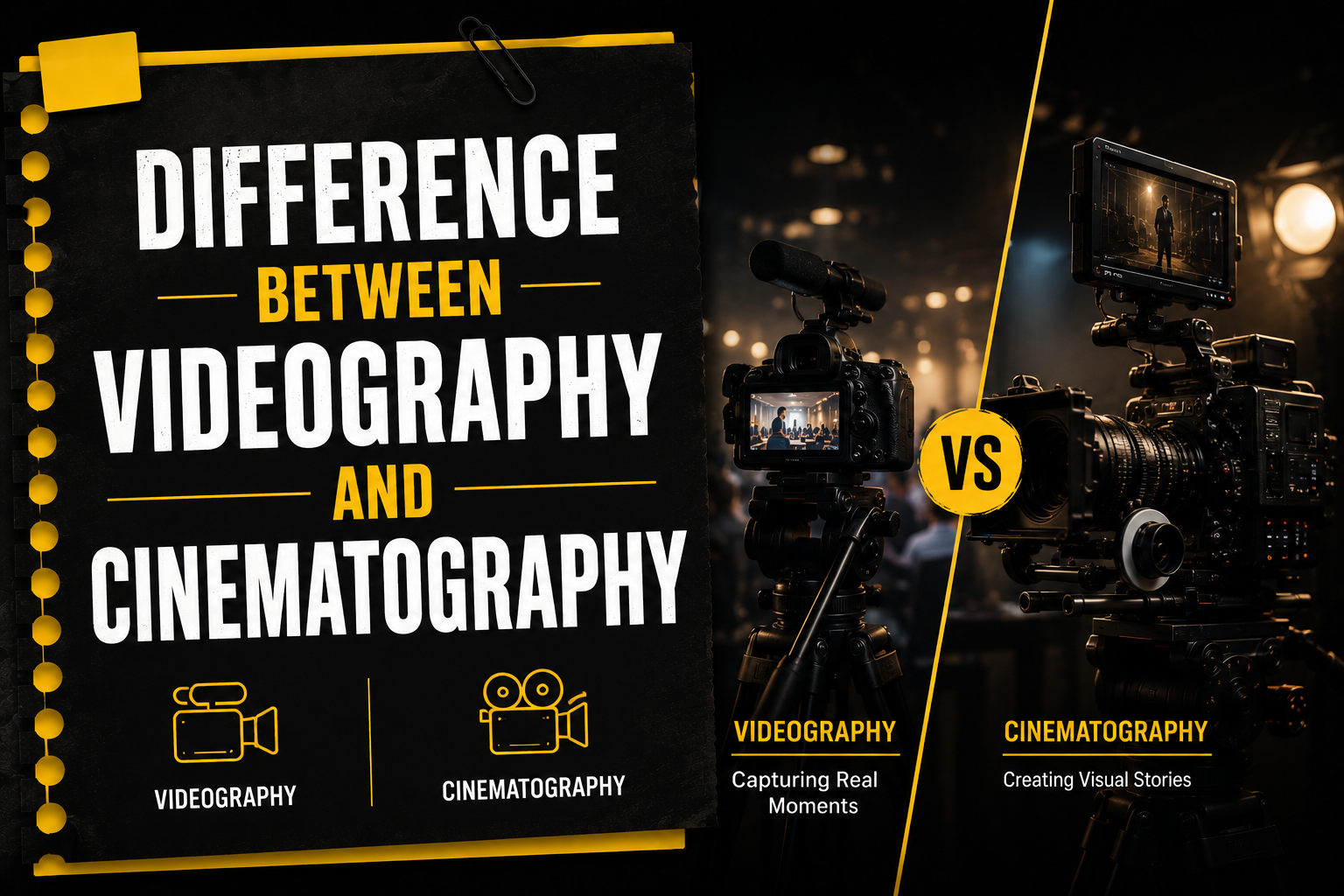
Difference Between Videography and Cinematography
Businesses investing in video marketing often ask one important question: What is the difference between videography and cinematography? Although these terms are commonly used interchangeably, they represent two different approaches to producing visual content. Understanding these differences can help brands select the most suitable production style for corporate videos, advertisements, documentaries, product launches, and digital marketing campaigns.
Whether you’re creating a brand film, YouTube advertisement, training video, or television commercial, choosing the right production method directly influences storytelling, audience engagement, and your marketing ROI. Working with an experienced video production company in India ensures your project aligns with your business goals while delivering professional-quality visuals.
What is Videography?
Videography focuses on capturing real-life events and business activities in a practical and efficient manner. A videographer is often responsible for filming, recording audio, managing lighting, and completing basic post-production, making it an excellent choice for projects that require quick turnaround and budget-friendly production.
Videography is widely used for:
- ● Corporate events
- ● Business interviews
- ● Product launches
- ● Employee training videos
- ● Educational content
- ● Conferences
- ● Social media campaigns
- ● Customer testimonials
Companies looking for Corporate Videography Services in Chandigarh frequently choose videography because it delivers professional content without the complexity of a large production crew. Likewise, organisations producing employee learning modules often collaborate with an e-learning video production company to create engaging and informative training videos.
It’s equally important to remember that filming is only one part of the production process. Professional editing enhances the final output significantly. If you’d like to understand why editing has become an essential business skill, explore our article on Why Video Editing Is a Must-Have Skill in 2026:
https://vastvikfilms.com/why-video-editing-is-a-must-have-skill-in-2026/
What is Cinematography?
Cinematography is the creative process of telling stories through carefully planned visuals. Unlike videography, cinematography emphasises artistic composition, cinematic lighting, camera movement, lens selection, shot planning, and professional colour grading to create an emotional connection with viewers.
Professional cinematographers typically work alongside directors, producers, lighting specialists, camera assistants, and editors to produce visually compelling content.
Cinematography is commonly used for:
- ● TV commercials
- ● Brand films
- ● Product advertisements
- ● Feature films
- ● Web series
- ● Documentary films
- ● Luxury marketing campaigns
Businesses working with an ad film production house in Mumbai often choose cinematography because it elevates their brand image through premium-quality visuals. Likewise, companies investing in high-end commercial campaigns frequently partner with a professional film production team in Mumbai to achieve cinematic storytelling.
According to Adobe, professional cinematography combines lighting, framing, composition, and camera movement to create immersive visual experiences that strengthen storytelling.
Difference Between Videography and Cinematography
Although both involve recording videos, their objectives and creative processes differ considerably.
| Feature | Videography | Cinematography |
| Primary Goal | Capture real events | Tell compelling stories |
| Production Crew | Individual or small team | Dedicated production crew |
| Camera Techniques | Basic | Planned cinematic movements |
| Lighting | Natural or minimal setup | Professionally designed lighting |
| Editing | Standard editing | Advanced editing and color grading |
| Budget | Affordable | Premium investment |
| Best Use Cases | Events, interviews, corporate videos | Commercials, advertisements, films |
The biggest difference between videography and cinematography is their purpose. Videography records what happens, whereas cinematography carefully designs every frame to evoke emotions and reinforce a story.
Equipment Used in Videography vs Cinematography
Videographers generally work with:
- ● DSLR or mirrorless cameras
- ● Gimbals
- ● Wireless microphones
- ● Portable LED lights
- ● Tripods
Cinematographers usually rely on:
- ● Cinema-grade cameras
- ● Professional prime lenses
- ● Advanced lighting systems
- ● Camera cranes
- ● Dollies
- ● Motion-control equipment
- ● Professional colour grading software
Understanding how focal length, aperture, composition, and camera movement influence visual storytelling can help businesses make better production decisions. Nikon’s guide to cinematography explains many of these fundamental filmmaking techniques and how professionals use them to create compelling visuals: https://www.nikonusa.com/learn-and-explore
Modern post-production techniques further enhance cinematic quality. Businesses interested in current editing workflows can also read our detailed guide on Post Production Editing Trends in 2026 Every Marketer Should Know:
https://vastvikfilms.com/post-production-editing-trends-in-2026-every-marketer-should-know/
When Should Businesses Choose Videography?
Videography is the ideal solution for companies that prioritise efficiency, affordability, and fast delivery.
It works particularly well for:
- ● Internal communications
- ● Employee onboarding
- ● Business presentations
- ● Product demonstrations
- ● Corporate training
- ● Event coverage
When Should Businesses Choose Cinematography?
Cinematography becomes the preferred choice when visual storytelling plays a central role in brand positioning.
It’s ideal for:
- ● Television commercials
- ● Brand documentaries
- ● Product launch campaigns
- ● Luxury advertisements
- ● Investor presentations
- ● Digital marketing films
An experienced film production house Mumbai or a video production house in Mumbai can create cinematic content that leaves a lasting impression on customers and strengthens brand credibility.
Businesses planning television or online advertising campaigns can also explore professional TV & Digital Ad Film production services:
https://vastvikfilms.com/services/tv-digital-ad-films/
Which Option Delivers Better Marketing Results?
Neither videography nor cinematography is universally better; the right choice depends entirely on your business objectives.
Choose videography when your goal is:
- ● Consistent social media content
- ● Corporate communication
- ● Educational videos
- ● Interviews
- ● Event highlights
Choose cinematography when your objective is:
- ● Brand storytelling
- ● Premium advertising
- ● Commercial campaigns
- ● Product launch videos
- ● Emotional audience engagement
Professional Photography Completes Your Brand Identity
High-quality videos become even more impactful when combined with professional photography. Whether you’re launching a new product or refreshing your brand, using both video and photography helps create a consistent visual identity across your website, social media, brochures, and eCommerce platforms.
Conclusion
Understanding the difference between videography and cinematography enables businesses to invest in the right production approach based on their marketing objectives, budget, and audience expectations. While videography excels at documenting events and corporate communication, cinematography transforms ideas into visually powerful stories that strengthen brand recognition and customer engagement.
Whether you’re creating brand films, commercials, or digital content, partnering with an experienced team like Vastvik Films ensures every video contributes to your business growth and long-term marketing success.